


Why Choosing the Right Silver Cleaner Safe for Pearls Matters
Finding a silver cleaner safe for pearls is not as simple as grabbing whatever is under your sink. The wrong product can permanently dull or etch your pearls — and the damage is irreversible.
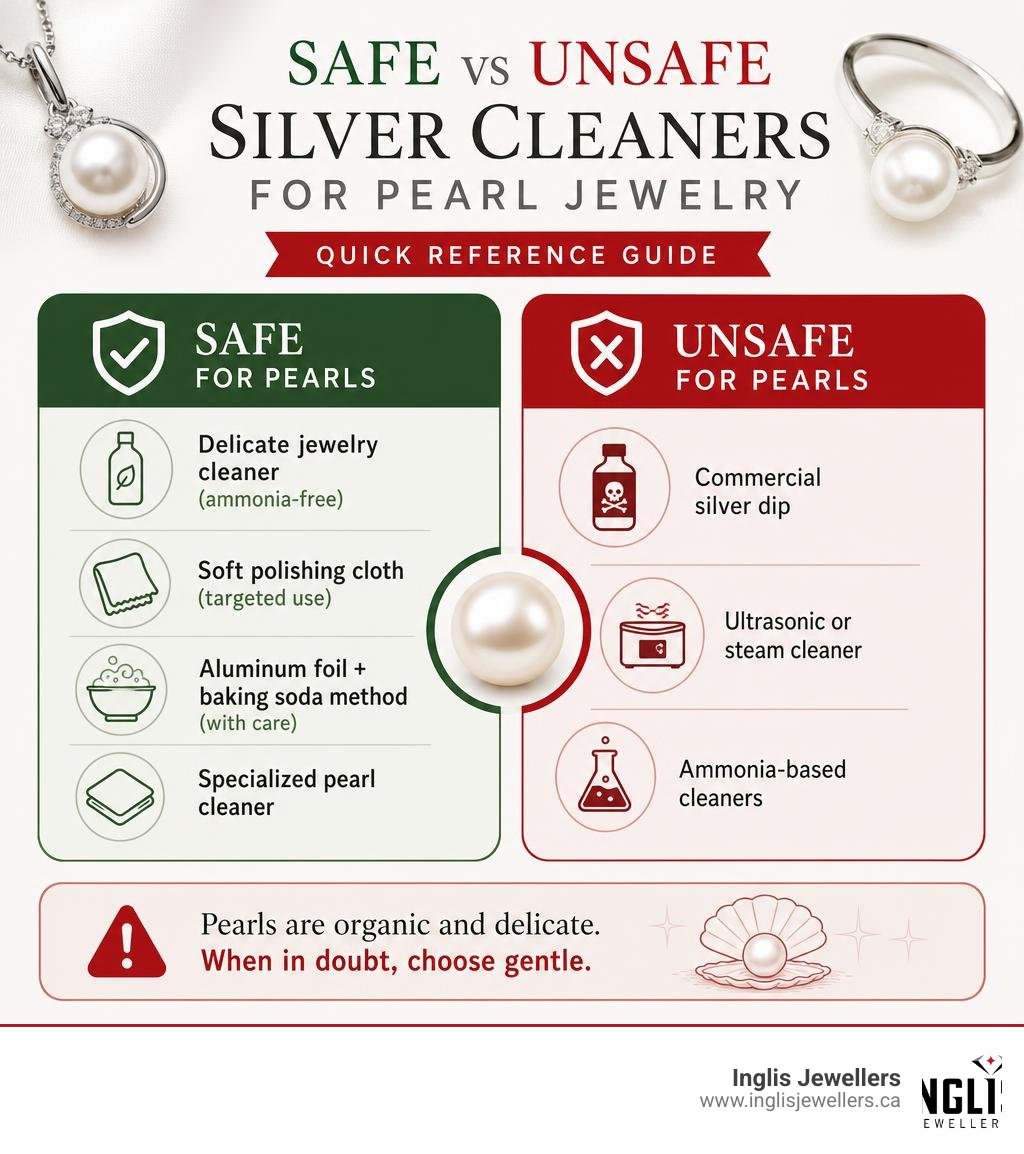
Quick answer: Most standard silver cleaners are not safe for pearls. Here's what to use instead:
| Method | Safe for Pearls? | Removes Tarnish? |
|---|---|---|
| Delicate jewelry cleaner (ammonia-free) | Yes | No |
| Hagerty Pearl Clean | Yes | No |
| Silver polishing cloth (targeted use) | Yes, if pearls are shielded | Yes (light) |
| Aluminum foil + baking soda method | Yes (with care) | Yes |
| Commercial silver dip (e.g., Tarn-X) | No | Yes |
| Ultrasonic or steam cleaner | No | Yes |
| Ammonia-based cleaners | No | Yes |
Pearls are organic gemstones. They're porous, soft, and chemically sensitive in ways that diamonds and sapphires simply are not. The same aggressive chemistry that strips tarnish off sterling silver can eat away at a pearl's surface layer — called the nacre — in minutes.
The good news? There are safe ways to keep both your silver and your pearls looking beautiful. You just need to know which products and methods work — and which ones to keep far away from your jewelry box.
Why Standard Silver Cleaners Destroy Pearls
To understand why a standard silver polish is a nightmare for pearls, we have to look at how these two materials are built. They are practically opposites in the chemistry world, and they don't play by the same rules.
Sterling silver is a durable metal alloy, typically composed of 92.5% pure silver and 7.5% copper. Over time, silver reacts with sulfur compounds in the air to create silver sulfide, which we know as dark, unsightly tarnish. Removing this tarnish requires either chemical reduction or physical abrasion.
Pearls, on the other hand, are organic gems created by living mollusks. They are made of calcium carbonate (mostly in the form of aragonite crystals) held together by an organic protein called conchiolin. This beautiful, layered structure is known as nacre.
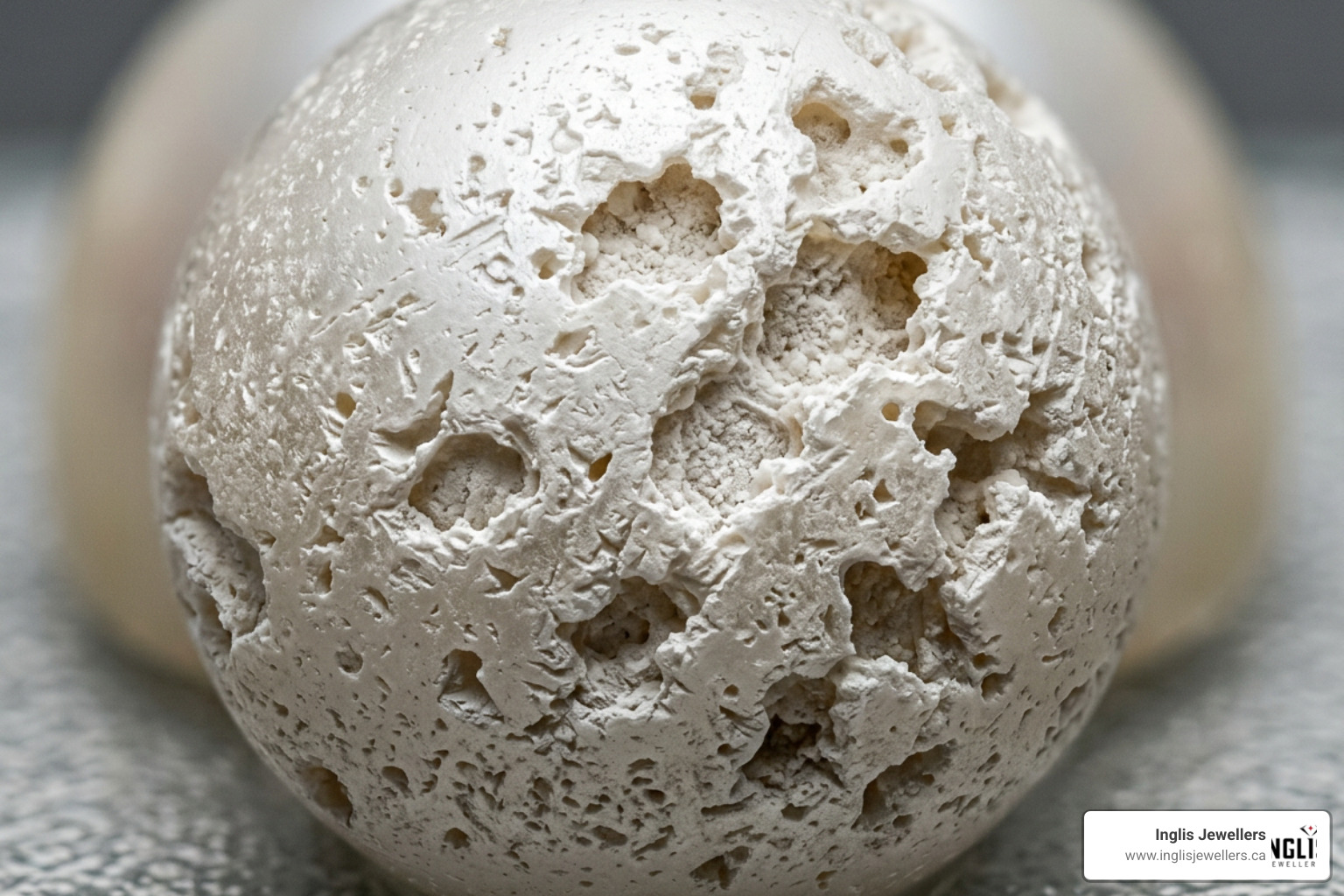
Because pearls are alkaline and porous, they are highly sensitive to acids, strong bases, and solvents. When you apply a standard chemical silver cleaner to a pearl, the acid or harsh chemicals immediately begin to dissolve the calcium carbonate. This chemical erosion strips away the micro-layers of nacre, resulting in:
- Loss of Luster: The pearl’s signature iridescent glow is replaced by a chalky, dead-white finish.
- Surface Pitting: Microscopic holes and rough patches develop, making the pearl feel gritty.
- Weakened Integrity: In severe cases, the pearl can literally begin to crumble or detach from its setting.
If you want to dive deeper into the delicate nature of these organic gems, you can read more about the Risks of standard silver cleaners on pearls.
Harsh Ingredients to Avoid
When shopping for cleaning products, you must check the ingredient list. If a product contains any of the following, keep it far away from your pearl-set silver jewelry:
- Thiourea: This organic sulfur compound is the active ingredient in many fast-acting liquid silver dips. It is incredibly effective at dissolving silver sulfide, but it is highly acidic and will ruin a pearl's surface almost instantly.
- Sulfamic Acid: Often paired with thiourea in heavy-duty tarnish removers, this acid is designed to eat through mineral deposits and metal oxides. On a pearl, it behaves like battery acid.
- Ammonia: While excellent for cutting through grease on diamonds, ammonia is far too alkaline for pearls and will dry them out, causing micro-cracking.
- Abrasive Pastes: Heavy polishes that require intense scrubbing rely on physical wear to scrape tarnish away. Because pearls are very soft (ranking only 2.5 to 4.5 on the Mohs hardness scale), these abrasives will scratch them to pieces.
For more information on how tarnish forms and why it requires such strong chemicals to remove, check out the science behind Chemical tarnish removers.
The Search for a Silver Cleaner Safe for Pearls
If standard silver dips are out of the question, what are your options? The jewelry market is filled with "delicate" cleaners, but it is vital to understand their limitations before using them on a mixed silver-and-pearl piece.
Why Most Commercial Products Fail as a Silver Cleaner Safe for Pearls
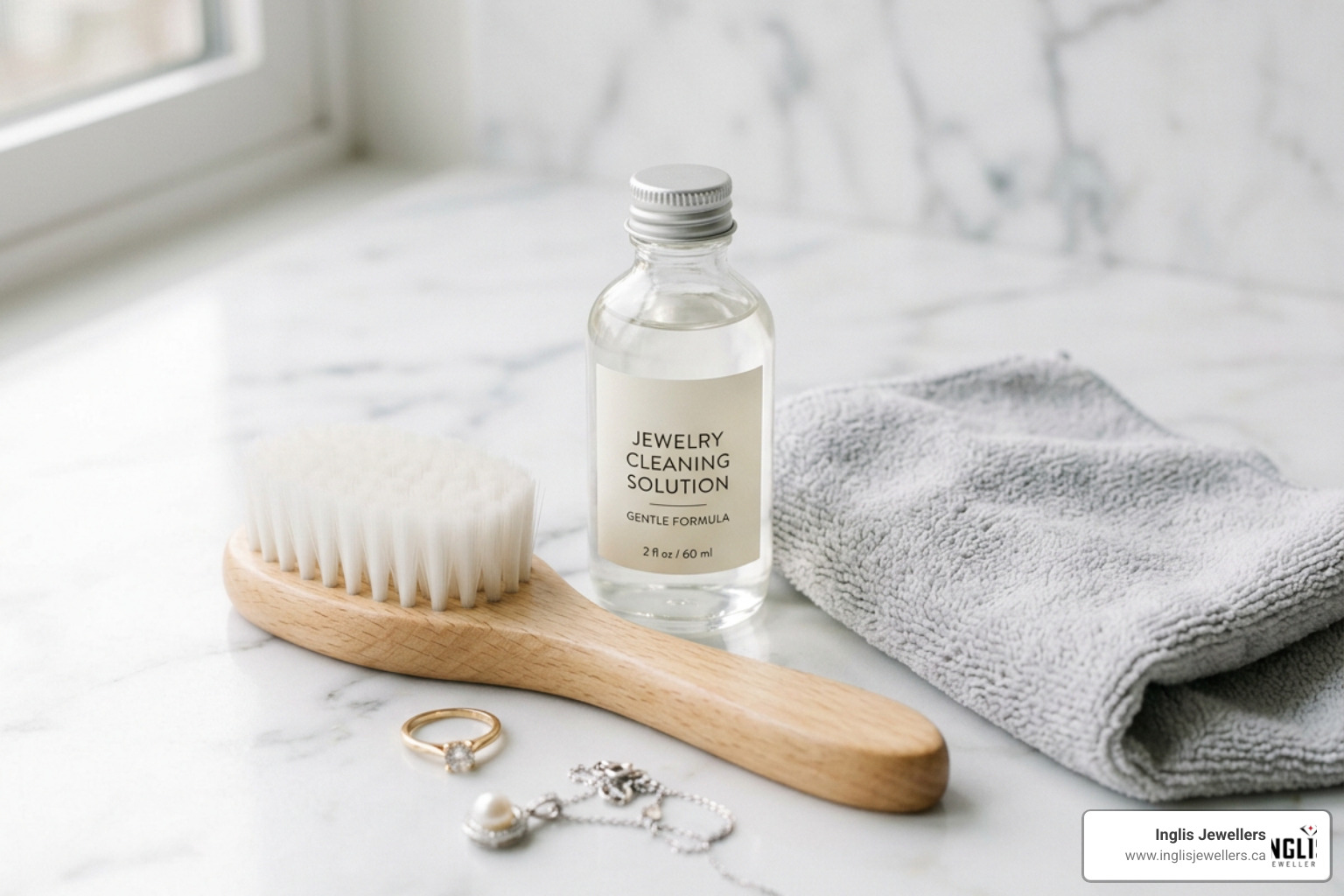
Many high-quality commercial products are explicitly labeled as "pearl-safe." For example, Connoisseurs Delicate Jewelry Cleaner and Hagerty Pearl Clean are exceptionally gentle, ammonia-free formulas designed to clean natural and cultured pearls, opals, and other delicate stones.
However, there is a catch: These delicate cleaners do not remove tarnish.
They are designed to wash away body oils, cosmetics, sweat, and everyday grime. They will make your pearls clean and shiny, but they will leave the tarnished sterling silver looking just as dark and dull as before.
Conversely, products that actually do remove tarnish — such as Silver Jewelry Cleaner – Connoisseurs Jewelry Cleaner or liquid dips like Tarn-X® Tarnish Remover for Silver & Gold | CLR Brands — carry explicit warnings on their packaging telling you never to use them on pearls or porous gemstones. Even plant-based formulas like Silver Cleaner – Restores Shine, Removes Tarnish – Koparo Clean that utilize citric or tannic acids can be too acidic for a pearl’s delicate nacre if allowed to sit or pool around the setting.
This leaves jewelry lovers in a tough spot. If you submerge the piece in a silver dip, you ruin the pearls. If you submerge it in a pearl cleaner, the silver remains black.
This dilemma is a frequent topic of discussion among jewelry designers and collectors, as seen in these Pearl-safe detarnishing discussions.
Safe DIY Alternatives to a Chemical Silver Cleaner Safe for Pearls
Fortunately, you don't have to choose between black silver and ruined pearls. There are clever ways to clean the metal without endangering the gemstone.
One popular home remedy is the electrolytic reduction method. This process uses a simple chemical reaction to convert silver sulfide (tarnish) back into metallic silver without using harsh acids or abrasive scrubbing.
The Aluminum Foil and Baking Soda Method
This method is highly effective for silver jewelry, but it must be done with extreme care if pearls are attached.
- How it works: You line a glass bowl with aluminum foil (shiny side up), place your jewelry on the foil, sprinkle it with baking soda (or sodium carbonate/washing soda, which is even more effective), and pour hot water over it. The aluminum has a stronger affinity for sulfur than silver does, so the sulfur atoms transfer from your silver to the foil, leaving your silver clean and bright.
- The Pearl Caveat: While baking soda is generally safe for pearls in mild, room-temperature solutions, hot water is not. Extreme heat can crack the pearl's nacre or melt the jewelry glue (epoxy) holding the pearl to its silver post. Furthermore, if your pearls are strung on silk thread, this wet process can stretch and weaken the thread.
- The Verdict: Only use this method on fully metallic sections of jewelry, or use a highly targeted, lukewarm variation where the pearls themselves are kept completely dry.
To learn more about the safety of commercial products versus home remedies, you can read the guide: Can You Use Silver Jewelry Cleaner on Pearls? .
How to Clean Silver Jewelry with Pearls Safely
Because you cannot simply drop a silver-and-pearl piece into a liquid cleaner, you must use a targeted approach. This means cleaning the silver and the pearls as two completely separate entities, even though they are joined in the same piece of jewelry.
Before we start, let's look at a quick comparison of safe versus unsafe cleaning methods:
| Cleaning Method | Best For | Risk Level to Pearls | Why? |
|---|---|---|---|
| Targeted Polishing Cloth | Sterling silver details | Very Low | You control exactly where the cloth touches. |
| Silver Wipes (Targeted) | Larger silver surfaces | Low | Safe if you rinse thoroughly and shield the pearls. |
| Delicate Dip (e.g., Hagerty) | Cleaning the pearl itself | None | Formulated specifically for porous gems; won't remove tarnish. |
| Standard Silver Dip | Plain sterling silver | Extremely High | Acidic chemicals will dissolve pearl nacre instantly. |
| Ultrasonic Cleaner | Hard gemstones (diamonds) | Extremely High | High-frequency sound waves crack pearls and weaken glue. |
Step-by-Step: The Targeted Polishing Method
This is the safest, most reliable way to clean tarnished silver jewelry that features pearls. By using physical barriers and precise movements, you can restore the shine to your silver without a single drop of harmful chemicals touching your pearls.
What You Need:
- A high-quality silver polishing cloth (like a Sunshine cloth)
- Pre-moistened silver wipes, such as Silver Wipes - Convenient Jewelry Cleaning Wipes | Weiman
- A dry microfiber cloth
- A small piece of plastic wrap or a thick silicone jewelry shield
- A wooden toothpick (for tight corners)
Step 1: Shield the Pearls
Before you begin polishing, cover the pearls. Wrap a small piece of plastic wrap tightly around each pearl, securing it at the base of the setting. This creates a physical barrier that prevents the polishing cloth or any cleaning residue from accidentally rubbing against the pearl's surface.
Step 2: Apply the Polishing Cloth or Wipe
Take your silver polishing cloth or a pre-moistened silver wipe and gently rub the tarnished silver areas. Use a back-and-forth motion rather than a circular one, as circular rubbing can highlight tiny scratches in the metal.
If you are using pre-moistened wipes, make sure they are ammonia-free. Use your fingernail or a wooden toothpick wrapped in the cloth to reach the tight silver nooks around the bezel or prongs.
Step 3: Buff and Clean the Metal
Once the tarnish is lifted, use a clean, dry section of your microfiber cloth to buff the silver to a brilliant shine. This removes any dark residue left behind by the polishing process.
Step 4: Rinse and Dry (If Using Wipes)
If you used a moist silver wipe, you must rinse the metal to remove any chemical residue. Dampen a cotton swab with lukewarm water and carefully wipe down the silver parts, ensuring no water pools around the pearl's setting. Immediately pat the entire piece dry with a soft cloth.
How to Clean Pearls Separately to Protect Their Luster
Once your silver is bright and shiny, it's time to give your pearls some gentle love. Pearls should never be submerged in water if they are strung on silk, as wet silk stretches, attracts dirt, and rots over time.
Step 1: Prepare a Mild Soap Solution
Mix a few drops of mild, non-citrus, additive-free dish soap (like plain blue Dawn) in a bowl of lukewarm water. Do not use laundry detergents, hand soaps with moisturizers, or anything containing lemon or vinegar.
Step 2: Dampen a Soft Cloth
Dip a clean, lint-free microfiber cloth into the soapy water. Wring it out thoroughly so it is barely damp.
Step 3: Gently Wipe the Pearls
Gently wipe each pearl individually. This removes any skin oils, sweat, perfume, or makeup that may have accumulated on the surface. If you are cleaning a pearl ring or earrings where the pearl is glued to a metal post, you can use a soft-bristled makeup brush dipped in the soapy water to clean around the base, but do not scrub hard.
Step 4: Wipe with Clean Water
Dampen a second cloth with plain, lukewarm water (no soap) and wipe the pearls again to remove any soapy residue.
Step 5: Dry Completely
Pat the jewelry dry with a soft towel. If your pearls are strung on a silk strand, lay them flat on a dry towel and let them air-dry completely. Connoisseurs notes that silk strands can take up to a week to dry thoroughly. Never wear them while the silk is damp, as the wet thread will stretch out and attract dirt, weakening the strand.
Frequently Asked Questions about Pearl and Silver Care
To help you keep your jewelry in pristine condition, we've compiled the most common questions our customers ask about caring for these delicate mixed-material pieces.
Can I use an ultrasonic or steam cleaner on pearl and silver jewelry?
Absolutely not. You should never, under any circumstances, clean pearl jewelry in an ultrasonic or steam cleaner.
Ultrasonic cleaners work by sending high-frequency sound waves through a liquid solution, creating millions of microscopic bubbles that collapse violently against the jewelry to dislodge dirt. While this is great for hard metals and diamonds, the intense vibrations can cause micro-fractures in a pearl's delicate nacre, leading to cracking or complete shattering.
Additionally, ultrasonic solutions like the Ultrasonic Jewelry Cleaner Solution + Silver Cleaning Plate are designed for metals and hard gemstones; they are not formulated for organic, porous materials.
Steam cleaners are equally dangerous. The intense heat and pressure can dry out a pearl, cause the outer layers to crack, and dissolve the jeweler's glue holding the pearl in its setting, causing the gem to fall out and get lost.
How should I store mixed pearl and silver jewelry to prevent tarnish?
Preventative care is the best way to avoid having to clean your jewelry in the first place. Because sterling silver tarnishes when exposed to air and humidity, proper storage is key:
- Avoid Plastic Bags: Never store pearls in airtight plastic bags. Pearls are organic and contain a small amount of moisture; sealing them in plastic can dry them out, causing them to craze (develop tiny surface cracks) and lose their luster.
- Use Soft Pouches: Store your mixed pieces in separate, soft fabric pouches or lined compartments in your jewelry box. This prevents the silver chains or clasps from scratching the soft pearls.
- Add Anti-Tarnish Strips: Place anti-tarnish strips or a piece of Pacific cloth (an anti-tarnish fabric) inside your jewelry box. These absorb the sulfur in the air before it can react with your silver.
- Keep Humidity Moderate: Do not store your jewelry in the bathroom or near heating vents. Pearls love a slightly moist environment, but excess humidity will accelerate silver tarnishing.
How often should my pearl and silver jewelry be professionally inspected?
We recommend having your pearl and silver jewelry professionally inspected and cleaned at least once a year, especially if you wear the pieces frequently.
During a professional inspection, a jeweler will check the integrity of the silver prongs or bezels holding your pearls in place. They will also inspect the silk thread on pearl strands to see if it has stretched, frayed, or become soiled. Most pearl necklaces require restringing every 1 to 2 years depending on how often they are worn.
Conclusion
Caring for jewelry that combines lustrous pearls with shimmering sterling silver requires a delicate touch and a bit of patience. While finding a silver cleaner safe for pearls is virtually impossible in a single bottle, using targeted polishing methods and gentle, soap-based cleaning techniques will keep both materials looking their absolute best without risking permanent damage.
At Inglis Jewellers, we have been helping jewelry lovers across Atlantic Canada care for their most precious keepsakes for decades. Whether you need a professional cleaning, a custom design, or expert repairs, our team is here to help.
If you have a heavily tarnished silver and pearl piece that you are afraid to clean at home, let our master goldsmiths handle it safely. Visit us in Truro, NS, New Glasgow, NS, Sydney, NS, or Riverview, NB for trusted, full-service jewelry care.
For more expert care tips or to learn about our in-store services, visit the Inglis Jewellers Goldsmith Gallery and Care Services. Let us help you preserve your jewelry's beauty and story for generations to come!