


Why Pearl Cleaning in the Atlantic Provinces Deserves Special Attention
Pearl cleaning in the Atlantic provinces is something every pearl owner in Nova Scotia, New Brunswick, PEI, and Newfoundland and Labrador should understand — because pearls are nothing like the other gems in your jewellery box.
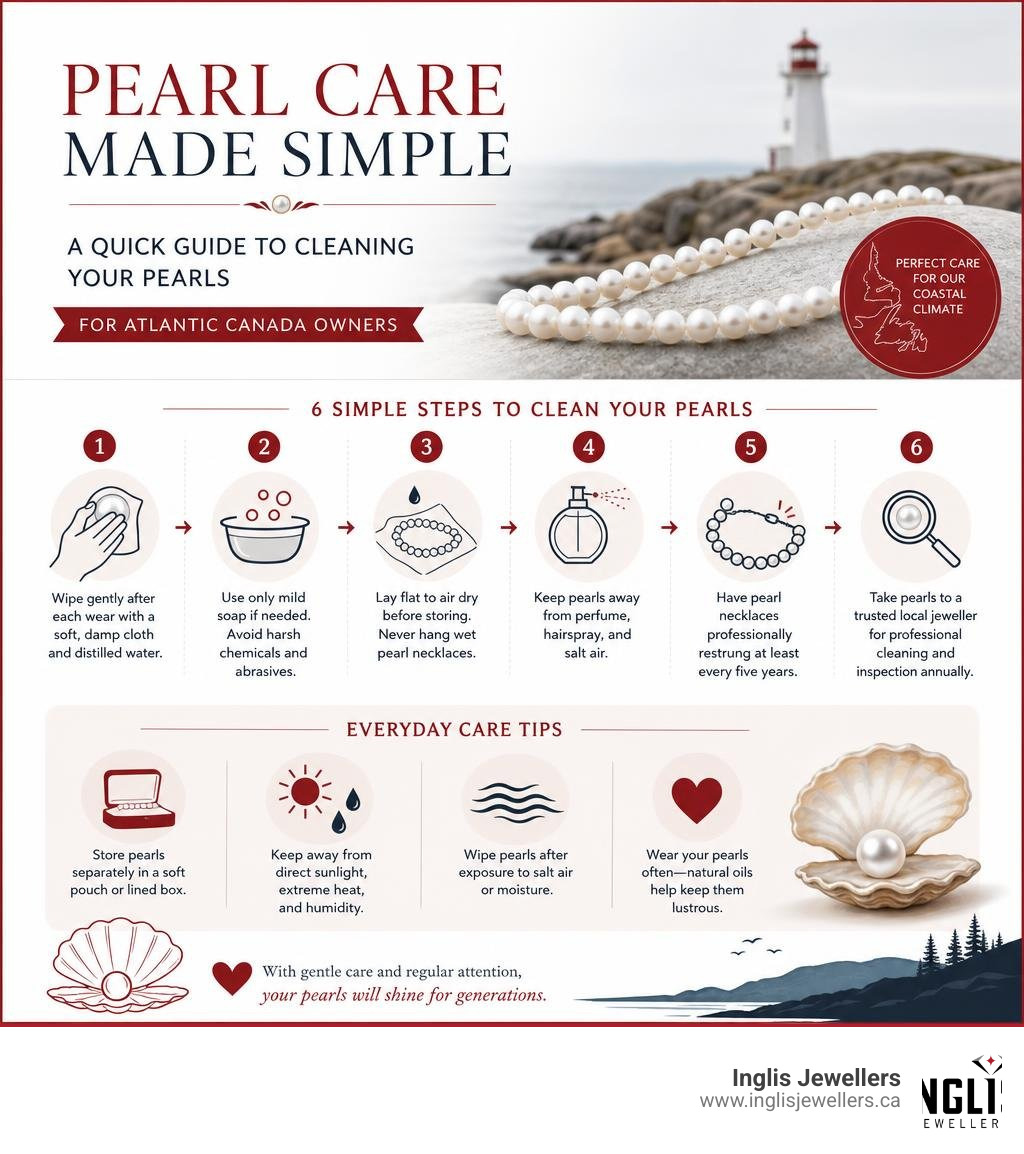
Quick answer: How to safely clean pearls in Atlantic Canada
- Wipe pearls gently with a soft, damp cloth using distilled water after each wear
- Use only mild soap if needed — never harsh chemicals or abrasive materials
- Lay flat to air dry before storing — never hang wet pearl necklaces
- Keep pearls away from perfume, hairspray, and salt air
- Have pearl necklaces professionally restrung at least every five years
- Take pearls to a trusted local jeweller for professional cleaning and inspection annually
Pearls are organic gems. They form inside living mollusks, layer by layer, which makes their surface — called nacre — incredibly beautiful but also surprisingly fragile. Unlike a sapphire or diamond, pearls can be scratched, dulled, or permanently damaged by everyday products most people never think twice about.
And if you live near the coast? The Atlantic climate adds another layer of complexity. Salt air, humidity, and seasonal moisture swings are a real concern for pearl owners in this region.
Whether you have a treasured heirloom strand or a recently purchased piece, knowing how to care for your pearls properly can mean the difference between jewellery that lasts a lifetime and one that deteriorates within years.
Why Pearls Require Unique Care Compared to Hard Gemstones
To truly understand how to care for pearls, we have to look at how they are built. Traditional gemstones like diamonds, rubies, and sapphires are minerals formed deep within the earth under intense heat and pressure. They are crystalline structures, which makes them incredibly hard and resistant to scratching.
Pearls, on the other hand, are organic. They are created by oysters and mussels in marine and freshwater environments. When an irritant gets inside the shell, the mollusk protects itself by coating the object in micro-crystals of calcium carbonate (aragonite) bound together by an organic compound called conchiolin. This beautiful, layered coating is what we call nacre.
Because of this organic composition, pearls are incredibly soft. On the Mohs hardness scale, which measures a gem's resistance to scratching from 1 to 10:
- A diamond sits at a perfect 10.
- A sapphire or ruby sits at a 9.
- A pearl sits at a fragile 2.5 to 4.5.
This means a copper penny, a steel nail, or even the edge of another gemstone in your jewellery box can easily scratch the surface of your pearls.
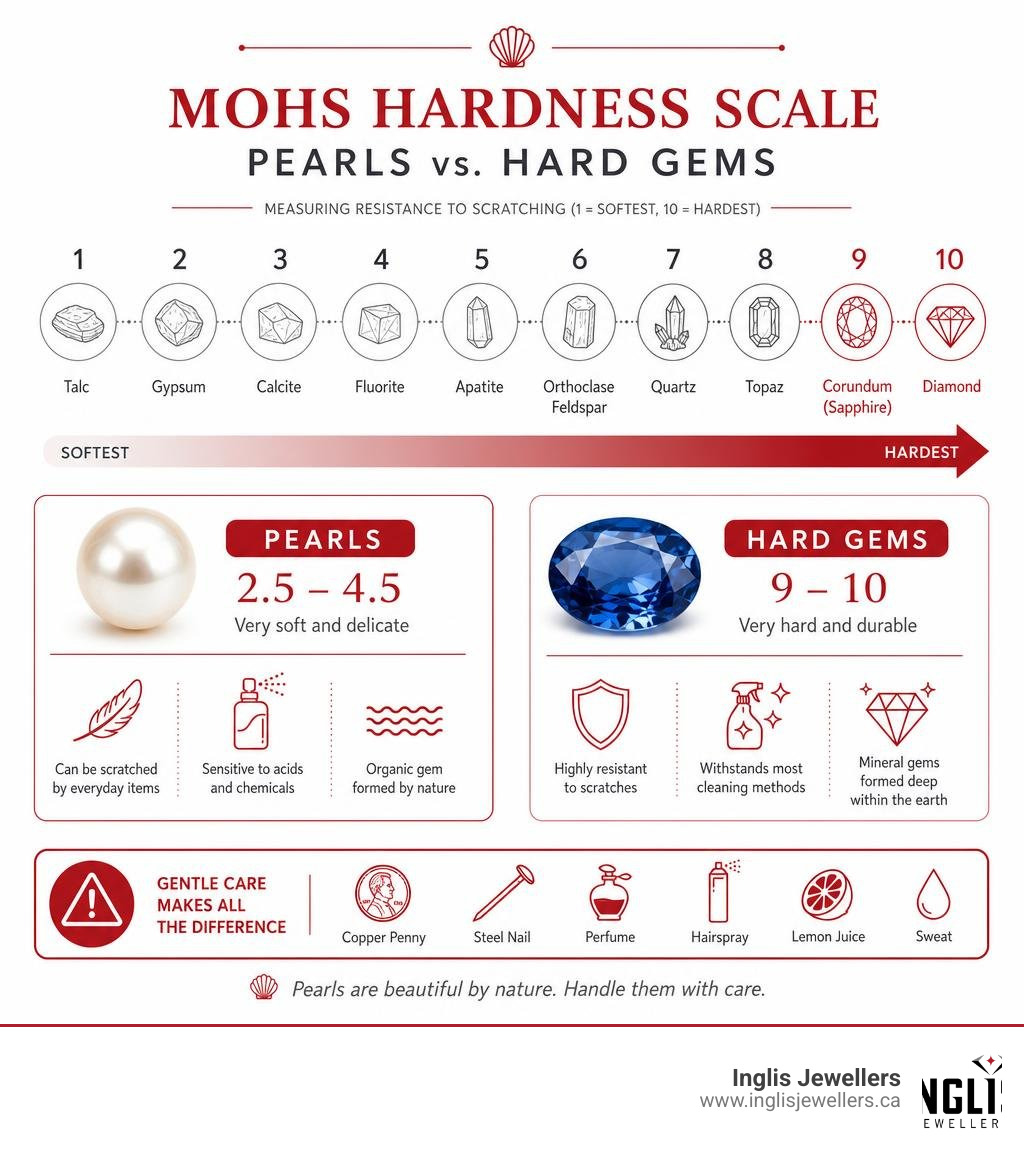
Furthermore, the calcium carbonate that makes up the nacre is highly sensitive to acids. If you expose your pearls to everyday acidic substances — such as vinegar, lemon juice, hairspray, perfume, cosmetics, or even human sweat — the acid will literally dissolve the nacre. This chemical sensitivity can permanently strip a pearl of its luster, leaving it looking dull, chalky, and lifeless.
To help visualize these differences, let us look at how pearls compare to a typical hard gemstone like sapphire when it comes to cleaning and maintenance:
| Feature | Hard Gemstones (e.g., Sapphires) | Soft Gemstones (e.g., Pearls) |
|---|---|---|
| Mohs Hardness | 9.0 | 2.5 to 4.5 |
| Composition | Mineral (Corundum) | Organic (Calcium Carbonate & Conchiolin) |
| Chemical Sensitivity | Extremely low; resistant to most mild acids | Extremely high; easily damaged by acids and alcohol |
| Ultrasonic Cleaning | Generally safe (unless heavily fractured) | Never safe; can shatter or dull the nacre |
| Best Cleaning Agent | Warm water, mild dish soap, soft brush | Distilled water, highly diluted mild soap, soft cloth |
| Thread/Stringing | Typically set in metal prongs or bezels | Strung on delicate silk thread |
For more detailed scientific insights into the structure and care of these delicate gems, you can refer to the comprehensive GIA Pearl Care and Cleaning Guide.
Because of these stark differences, you must never clean your pearls the same way you clean your diamond engagement ring or sapphire earrings. Treating them with the same rough scrubbing or harsh chemicals will ruin them forever.
Best Practices for Pearl Cleaning in the Atlantic Provinces
Cleaning pearls is not about scrubbing away grime with brute force; it is about gentle preservation. In our beautiful coastal communities across Nova Scotia and New Brunswick, we encounter unique environmental elements like salt-heavy sea breezes, high humidity, and woodstove heat in the winter. Keeping your pearls clean requires a delicate touch and the right supplies.

The golden rule of pearl care is simple: Avoid harsh chemicals and abrasive materials at all costs.
Here are the absolute best practices to keep in mind before you begin:
- Never submerge your pearl necklaces in water: While pearls grow in water, the silk thread they are strung on does not like to be soaked. Submerging a pearl necklace stretches and weakens the silk, making it prone to snapping. It also allows water to get trapped inside the drill holes of the pearls, which can cause the thread to rot from the inside out.
- Always use distilled water: Tap water in many parts of the Atlantic provinces can contain high levels of chlorine, iron, or calcium. These minerals can leave a cloudy residue on your pearls over time. Distilled water is pure and completely free of minerals, making it the safest choice.
- Use only the mildest soap: If your pearls are visibly dirty or oily, you can use a tiny drop of pure, non-detergent soap (like castile soap or a highly diluted, fragrance-free baby soap) mixed into distilled water. Never use dish soaps, window cleaners, baking soda, or commercial jewellery cleaning solutions unless they are specifically formulated and labeled for pearls, such as professional Pearl Cleaning solutions.
- Use a lint-free microfiber cloth: Avoid paper towels, tissues, or coarse bath towels. These materials have rough fibers that can micro-scratch the soft nacre. A clean, lint-free microfiber cloth or a soft cotton flannel cloth is perfect.
Step-by-Step DIY Pearl Cleaning in the Atlantic Provinces
If your pearls are looking a bit dull after a wonderful evening out in Truro, New Glasgow, Sydney, or Riverview, follow this safe, step-by-step DIY cleaning routine to restore their natural glow:
Step 1: The Post-Wear Wipe Down
Every single time you take off your pearls, get into the habit of giving them a gentle wipe down. Use a dry, clean, ultra-soft microfiber cloth to gently wipe each pearl. This simple step removes trace amounts of skin oils, sweat, perfume, and cosmetics before they have a chance to sit and eat away at the nacre.
Step 2: Prepare a Gentle Cleaning Solution
If your pearls need a deeper clean, mix a bowl of lukewarm distilled water with one or two drops of mild, fragrance-free soap. Swirl the water to mix it, but do not create a mountain of suds.
Step 3: Dampen the Cloth (Do Not Soak)
Dip your soft microfiber cloth into the soapy distilled water. Wring it out thoroughly until it is barely damp. You do not want excess water dripping off the cloth and soaking into the thread.
Step 4: Gently Wipe Each Pearl
Carefully wipe down each individual pearl on your strand. Pay close attention to the areas around the drill holes where dirt and oils tend to collect. Be incredibly gentle; do not scrub or use your fingernails to scrape off debris.
Step 5: Rinse with Clean Distilled Water
Dampen a second clean cloth with pure, soap-free distilled water. Wipe down the pearls once more to remove any soap residue.
Step 6: Air Dry Flat
Lay your pearls flat on a clean, dry, lint-free towel in a well-ventilated area. Never hang a wet pearl necklace to dry. The weight of the wet pearls will stretch out the damp silk thread, permanently damaging the structural integrity of your strand. Allow them to dry completely for at least 24 hours before wearing or storing them.
Step 7: Safe Storage Tips
Once fully dry, store your pearls in a soft fabric pouch, a velvet-lined jewellery box, or wrapped in a soft chamois cloth. Keep them stored flat. Never store them in plastic bags or airtight containers; pearls are organic and contain a small amount of moisture. If they are sealed away without air, they can dehydrate, crack, and lose their luster. Always store them separately from other metal jewellery to prevent scratches.
Environmental Factors Affecting Pearls in Atlantic Canada
Living on the East Coast of Canada means enjoying stunning ocean views, but it also means dealing with unique climate challenges that can affect your fine jewellery.
In coastal cities and towns throughout Nova Scotia and New Brunswick, the air is naturally rich in salt and moisture. While wild, natural pearls like those discussed in historical studies of Eastern North Atlantic Shellfish Pearls are born in the ocean, finished pearl jewellery is highly vulnerable to coastal elements.
Here is how the Atlantic environment impacts your pearls:
- Salt Air and Ocean Spray: If you enjoy walking along the waterfront in Sydney or taking in the sea air in New Brunswick, your pearls are exposed to airborne salt. Salt is abrasive and naturally corrosive. If left on your pearls, salt residue can slowly scratch the nacre and weaken the silk thread holding the strand together.
- High Coastal Humidity: Summer in the Atlantic provinces can be incredibly humid. High humidity can cause the silk thread in your pearl necklaces to absorb moisture from the air. When silk remains damp for extended periods, it stretches out more easily and can even attract dust and microscopic mold.
- Dry Winter Heating: Conversely, our winters require heavy indoor heating. Whether you rely on electric baseboards, heat pumps, or woodstoves in Truro or New Glasgow, indoor air in the winter becomes incredibly dry. This extreme dryness can sap the natural moisture from your pearls, causing the nacre to become brittle and prone to micro-cracking.
To protect your pearls from these regional climate swings, always store them in a room with stable temperatures. Avoid storing them near heating vents, radiators, or in drafty, damp basements. And remember: the best way to keep your pearls hydrated is actually to wear them! Your skin's natural oils provide just the right amount of moisture to keep them glowing, provided you wipe them down afterward.
The Importance of Professional Pearl Restringing and Maintenance
While regular home care is fantastic for keeping surface dust and oils at bay, it cannot replace the essential maintenance that only a professional goldsmith and jeweller can provide. The most critical aspect of long-term pearl care is professional restringing.

Most high-quality pearl necklaces are strung on natural silk thread. Silk is chosen because it is incredibly soft, drapes beautifully against the skin, and does not scratch the inside of the pearl drill holes. However, silk is a natural fiber, which means it naturally degrades, stretches, and weakens over time.
Professional restringing involves several key techniques that protect your investment:
- The Knotting Technique: A professional jeweller will tie a tiny, precise knot between every single pearl on the strand. These knots serve two vital purposes. First, they prevent the pearls from rubbing against one another, which would wear away the nacre. Second, if your necklace ever snaps, only one pearl will fall off, saving the rest of your precious strand from scattering across the floor.
- Thread Stretching: Over time, you might notice extra space between the knots and the pearls. This is a clear sign that the silk thread has stretched out. When this happens, the pearls can slide back and forth, exposing the thread to dirt and causing uneven wear.
- The Five-Year Rule: As a general rule of thumb, pearl necklaces that are worn frequently (at least once a week) should be professionally restrung every 1 to 2 years. If you only wear your pearls on special occasions, they should still be restrung at least every five years because silk naturally dry-rots and weakens over time, even when sitting in a jewellery box.
If you notice your strand sagging, gaps forming next to the clasp, or the thread looking discoloured or frayed, it is time to bring them in for a professional inspection.
Finding Reputable Pearl Care Services in Atlantic Canada
When it comes to servicing fine jewellery, you want to trust your pieces to professionals who understand the delicate nature of organic gems. Across the Atlantic provinces, residents have access to various local cleaning services. For example, you might use Bee-Clean Atlantic | Commercial Cleaning Services to keep your business offices pristine in major hubs like Halifax, Moncton, Fredericton, Saint John, Charlottetown, or St. John’s. You might even hire local home cleaners like PEARLMAID - Professional Cleaning Services - Moncton, Shediac, Riverview, Dieppe or Pearls Cleaning Services to keep your living space spotless. You might even look into Best Boat Bilge Cleaning Atlantic Canada to keep your vessel's bilge spotless and safe from oil buildup.
But when it comes to your fine jewellery, commercial and industrial cleaners are not the answer. Your precious pearls require the highly specialized touch of a professional bench jeweller and goldsmith.
Professional Pearl Cleaning in the Atlantic Provinces
For those living in Nova Scotia and New Brunswick, we are proud to offer trusted, professional pearl cleaning and restringing services right in your backyard. With our convenient physical showrooms in Truro, NS, New Glasgow, NS, Sydney, NS, and Riverview, NB, you do not have to mail your irreplaceable family heirlooms away to a distant facility.
When you bring your pearls to us, our experienced on-site team will:
- Inspect the Nacre: We use specialized magnification to check for signs of cracking, peeling, or chemical damage.
- Examine the Thread: We assess the tension, cleanliness, and strength of your existing silk thread.
- Clean Safely: We use professional-grade, pearl-safe cleaning techniques that lift away years of built-up oils and dirt without risking damage to the delicate organic structure.
- Restring with Precision: Our skilled goldsmiths can completely restring your pearls on premium silk thread, adding secure, hand-tied knots and verifying that your clasps are perfectly safe and functional.
Frequently Asked Questions About Pearl Care
How often should I have my pearls restrung?
For security and durability, we recommend having your pearl necklaces and bracelets inspected annually and restrung at least every five years. If you wear your pearls very frequently, you should have them restrung every 1 to 2 years. Keep an eye out for visible gaps between the pearls and the knots, as this is the primary indicator that the silk thread has stretched and weakened.
Can I use ultrasonic cleaners on my pearl jewelry?
Absolutely not. You should never, under any circumstances, place pearl jewellery into an ultrasonic cleaner. Ultrasonic cleaners work by sending high-frequency sound waves through a liquid solution, creating millions of microscopic bubbles that collapse violently against the jewellery to loosen dirt.
While this process is fantastic for shaking grime loose from hard gemstones like diamonds and sapphires, it can easily shatter the delicate, layered nacre of a pearl or cause it to crack and peel. Always stick to gentle manual cleaning for soft, organic gems.
How does the Atlantic climate affect my pearls?
The high humidity and salty marine air of the Atlantic provinces can weaken the silk threads of your necklaces and leave a fine salt residue on the pearls' surface. Conversely, dry winter heating can dehydrate pearls, making them brittle.
To combat these regional climate challenges, always wipe down your pearls after wearing them to remove salt and oils, store them flat in a breathable fabric-lined box (never in airtight plastic), and wear them regularly so they can absorb a healthy amount of natural moisture from your skin.
Conclusion
Pearls are timeless, elegant, and uniquely personal. Whether they are a classic strand passed down through generations or a modern piece celebrating a special milestone, they represent beautiful memories that deserve to be preserved. By following these simple home cleaning steps and partnering with experienced professionals for regular maintenance, you can ensure your pearls keep their deep, lustrous glow for decades to come.
At Inglis Jewellers, we combine trusted local craftsmanship with full-service support to help you care for your most cherished pieces. Whether you need a simple inspection, a delicate cleaning, or a complete professional restringing, our teams in Truro, New Glasgow, Sydney, and Riverview are here to help.
Learn more about our custom jewelry care and goldsmith services or visit one of our showrooms today to give your precious pearls the expert care they deserve!